
Steak Bibimbap
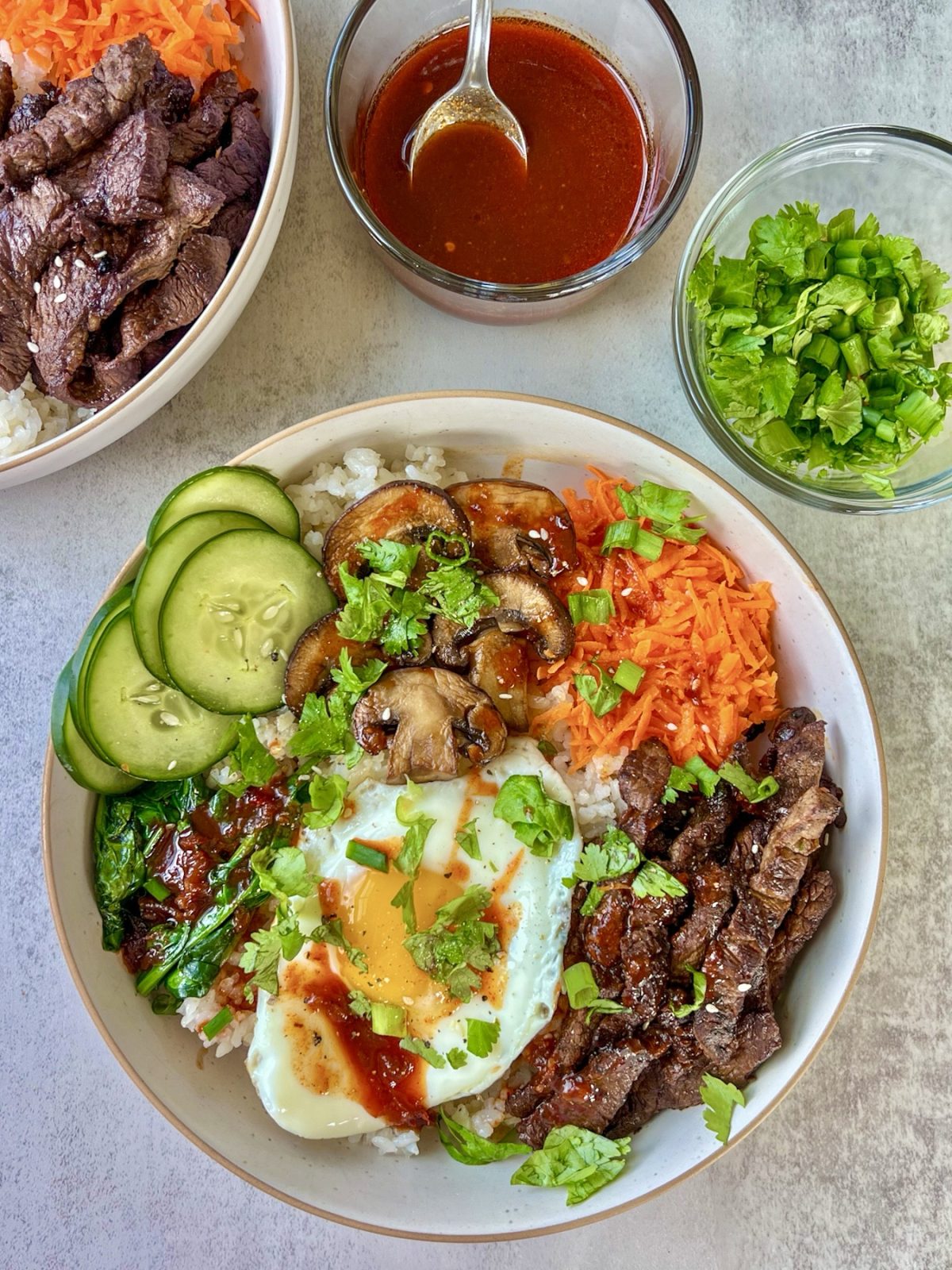
I love experimenting at home with different Asian recipes and I’ve always wanted to make my own bibimbap! Bibimbap is a vibrant and popular Korean dish that features veggies both raw and sautéed, a protein, and a sunny side up egg – served over a bed of rice! I saw it on a cooking show years ago and have wanted to try it ever since! This Steak Bibimbap was super flavorful, unique, and easy to make! There was so much going on, so many different textures and temperatures, which made it really fun to dissect! The crunchy carrot and cucumber, that flavorful marinated steak, the crispy rice, the lemon gochujang glaze?! It was awesome.
This post may contain affiliate links
When was bibimbap made for the first time?
The earliest version of bibimbap was documented in Korea in 1590 and was originally called “hondon-ban.” In the 1600’s and 1700’s, additional names for this dish appeared such as, “goldong-ban,” and from there it just kept on evolving!
Food offerings were mixed with rice after ceremonies, leftover banchan was mixed with rice at the lunar new year, while farmers mixed many veggies and extras into bowls for filling, practical meals. All of these food traditions adapted and morphed over time to become the modern “bibimbap” we’re familiar with today, getting its official name in the 1800’s, after appearing in Korean encyclopedias!
Did you know?
The name sirloin literally means “above the loin,” which comes from the Middle English word “surloine.” It’s actually two different steaks, all in one name! When you buy a sirloin steak you are getting one of the two, top or bottom sirloin. Top sirloin is tender and lean, while bottom sirloin is basically tri-tip. Sirloin is also one of the leanest cuts, though still very juicy and flavorful!
With today’s grocery prices, as much as we all would love to have New York Strips or Wagyu Ribeye 24/7 – this recipe just goes to show how any cut of beef can absolutely shine if handled properly!
What ingredients do I need to make this?
For the steak marinade:
Sirloin Steak
Garlic
Lemon
Soy Sauce
Honey
Sesame Oil
Black Pepper
Steak bibimbap extras:
White Mushrooms
Spinach
Carrots
Cucumber
Green Onion
Cilantro
Eggs
For the lemon gochujang glaze:
Gochujang
Lemon
Sesame Oil
Soy Sauce
Rice Vinegar
Honey
Warm Water
For the crispy rice:
Day Old Cooked Sushi Rice
Vegetable Oil
Sesame Oil
Salt
For sautéing the veggies:
Vegetable Oil
Sesame Oil
For serving:
Sesame Seeds
Freshly Cracked Black Pepper
What equipment do I need?
- Measuring Cups and Spoons
- Cast Iron Skillet
- Tongs
- Juicer
- Zester
- Cheese Grater
- Mixing Bowls
- Whisk
- Large Skillet
- Spatula
- Cutting Board
- Chef Knife
How do I make it?
To make the sushi rice:
To get started on this recipe, we’ll want to make the sushi rice! Then we can cool it and refrigerate it until the next day – that’s when we’ll be making the steak bibimbap.
I found the box of my sushi rice to be really ambiguous, so I wanted to include a quick break down on my process. First, I used a fine mesh sieve to rinse the sushi rice under cold water, until it ran mostly clear – this took a couple of minutes to do. Even if your box says it’s not necessary, I say do it! That way you don’t potentially end up with a gummy rice vs sticky rice!
Next, I added it to a stockpot with 3 cups + 2 tbsp water, since I had 20 oz (or 2 3/4 cups) of rice.
Pro Tip: The gold-standard sushi rice ratio is 1:1.1 – one cup of rice per 1.1 cups of water.
Bring the mixture to a boil on medium heat, then once boiling, cover, reduce heat to low, and cook for 15 minutes. After this, don’t remove from heat, just turn the heat off, leaving the stockpot on the hot burner, with the lid on. Do not stir. Let the rice steam there for 10 minutes. After that, remove from the burner, take the lid off, and fluff with a fork.
Remove to a Tupperware to cool completely, then cover and refrigerate overnight.
The key to cooking sushi rice:
- The only time you should be stirring the rice is when you add it with the water to the stockpot – before it has ever touched heat. Do not stir at all during the cooking process.
- Do not cover until the rice and water have started to boil! Only then do you cover and reduce the heat.
- Do NOT remove the cover until after the entire process is done, including the steaming step.
As you can see, it’s easy enough, but it’s different from most of the rice we are used to cooking! If you have a rice cooker, use that! I’m sure it’s even easier!
To make the steak marinade:
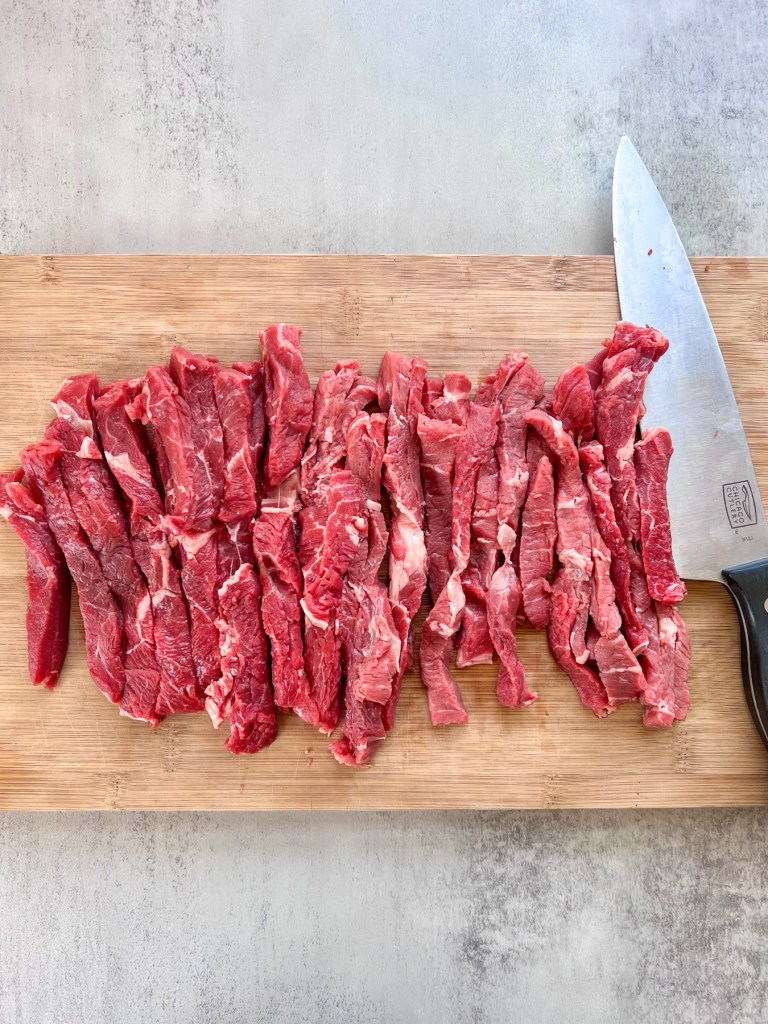
Cut the sirloin steak against the grain, into thin strips.
Next, wash and dry the lemon, then juice and zest it into a large mixing bowl, reserving some of the lemon juice to use later for the sauce. Grate the garlic into the bowl, then add the rest of the ingredients for the marinade besides the steak.
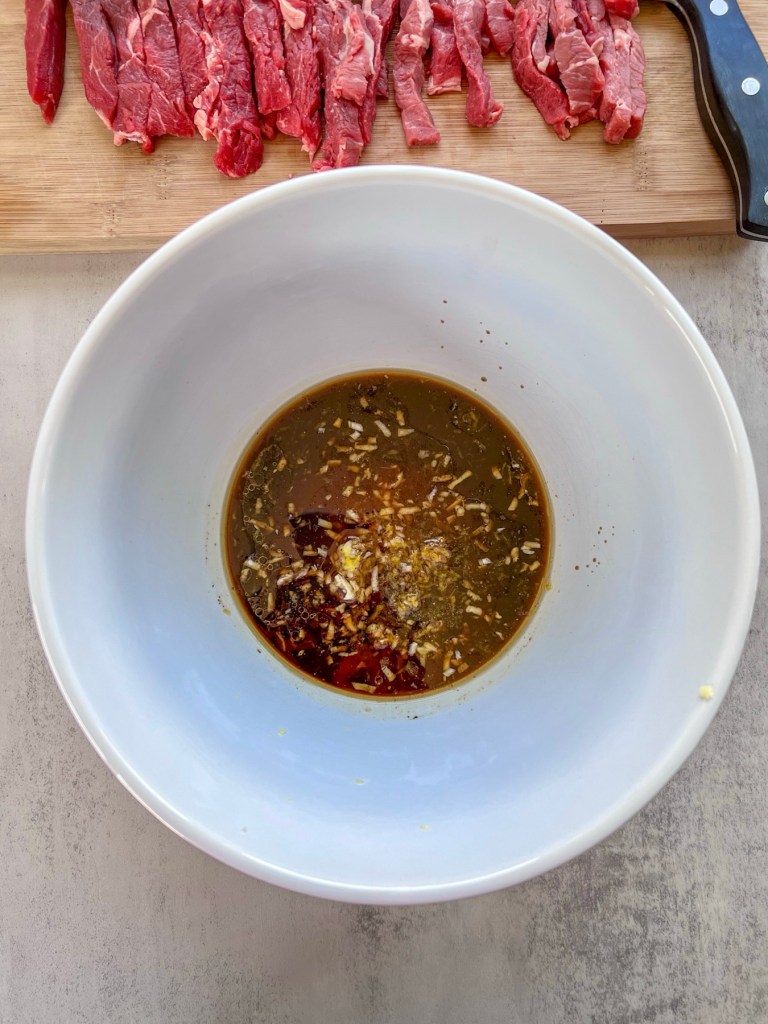
Whisk to combine.
Add the steak, then use your hands to toss and coat. Set aside at room temperature while you prep the rest. This ensures a more even cook vs refrigerating it!
Pro Tip: Because of the lemon and the rice vinegar in this, we don’t want to marinate the steak for too long. Over 30 minutes is not recommended, as it can start to change the texture of the meat.
To prep the veggies:
Wash the rest of the veggies and herbs. Next, peel and shred the carrots. Thinly slice the cucumber, leaving the peels on. Thinly slice the mushrooms and the green onion, then chop the cilantro.

To make the lemon gochujang glaze:
In a small mixing bowl, add the gochujang, soy sauce, honey, lemon juice, rice vinegar, sesame oil, and some warm water.
Whisk to combine, then set aside until ready to use.
To make the crispy rice:
In a large skillet on medium, heat the vegetable oil, then add the day-old sushi rice in a single layer, pressing down with a spatula. Cook undisturbed for a few minutes, until golden.

Flip, break the rice into chunks, sprinkle with salt, and drizzle the sesame oil over top. Press down in single layer again and cook a few minutes more until golden and crispy.
Remove to a plate until ready to use.
To sauté the veggies:
In that same skillet, heat the oils for the veggie sauté over medium heat. Add the mushrooms in a single layer and cook undisturbed for a few minutes. Flip each mushroom with a tong and cook a few minutes more, until golden.

Move to a plate.
Next, in the same skillet, add the spinach and sauté until wilted. Move to the plate with the mushrooms but keep them separate.
To sear the steak:
At this point, our steak should be ready to cook!
Heat a cast iron skillet over high heat, then add the steak in a single layer, working in batches. Cook a minute or so, then flip with the tongs and cook another minute more, until crispy.

Repeat until all beef has been seared, setting aside on a plate until ready to use.
Pro Tip: This hard sear creates crunch and char, without overcooking the steak!
To make the sunny side up eggs:
Spray that same skillet we used for the rice and veggies with some cooking spray, then turn the heat to medium low. Crack the eggs, then cover and cook for a few minutes, without flipping.
Once the whites have set and no longer jiggle, promptly and carefully remove from the pan to avoid over cooking the eggs.
To bring the steak bibimbap together:
To assemble the bowls, first scoop out some crispy rice, then add individual sections of the mushrooms, spinach, and carrots. Layer the steak generously in another section, add the egg to the middle, then layer the cucumbers off to the side.

Drizzle the lemon gochujang glaze over top, then sprinkle on the green onion and cilantro.
To serve:
Finish the bowls off with sesame seeds and freshly cracked black pepper.
Serve steak bibimbap hot, breaking open that egg yolk and watching it all unfold into the sauce, with those hot and cold flavors and textures all coming together. SO GOOD! Enjoy!

Tips:
- Use whatever type of steak you want for this steak bibimbap! Thinly sliced beef steak would be another affordable option, and it’s already cut for you!
- Add whatever other veggies you want to this. As long as you’ve got those cooked and raw veggies, the bibimbap vibes will come to life! The different temperatures and textures are a key component of this authentic Korean dish!
- If you don’t feel like having the egg sunny side up, you can always make it over easy or even soft boil it!
- This does have quite the kick! The good news is you can choose your spice level very easily by adjusting the gochujang as you see fit. There are a ton of cooling elements going on too, so my kids were still pumped to eat it! I’d say, it was still family friendly!
- This recipe will make 4 large bowls! Any leftovers will keep for 2-3 days if stored in an airtight container in the refrigerator.
Love tackling Asian cuisine at home too? Check these out!
In the mood for more steak dishes that won’t break your bank?

Steak Bibimbap
Equipment
Ingredients
For the steak marinade:
- 1 lb. Sirloin Steak sliced into thin strips against the grain
- 2 Garlic Cloves grated
- 3 tbsp Soy Sauce
- 1 tbsp Lemon Juice freshly squeezed
- 1 tbsp Sesame Oil
- 1 ½ tbsp Honey
- 2 tsp Lemon Zest
- ½ tsp Black Pepper
Steak bibimbap extras:
- 1 ½ cups White Mushrooms sliced
- 1 ½ cups Spinach packed
- 1 cup Carrots peeled and shredded
- 1 cup Cucumber thinly sliced, peels on
- ¼ cup Green Onion thinly sliced
- ¼ cup Cilantro chopped
- 4 Eggs
- Cooking Spray
For the lemon gochujang glaze:
- 3 tbsp Gochujang or less for mild spice
- 1 ½ tbsp Soy Sauce
- 1 ½ tbsp Honey
- 1 tbsp Warm Water for thinning
- 2 tsp Lemon Juice freshly squeezed
- 1 tsp Sesame Oil
- 1 tsp Rice Vinegar
For the crispy rice:
- 20 oz Cooked Day-Old Sushi Rice
- 2 tbsp Vegetable Oil
- 2 tsp Sesame Oil
- 1 tsp Salt
For sautéing the veggies:
- 1 tbsp Vegetable Oil
- 1 tsp Sesame Oil
For serving:
- Sesame Seeds
- Freshly Cracked Black Pepper
Instructions
To make the steak marinade:
- Add all ingredients for the steak marinade besides the steak to a large bowl, then whisk to combine.
- Add the thinly sliced steak to the bowl, then use your hands to toss and coat.
- Set aside at room temperature for about 30 minutes. This is a great time to be prepping the rest of the veggies and herbs, making the sauce, and crisping up the rice and veggies!
To make the lemon gochujang glaze:
- Add all ingredients for the lemon gochujang glaze to a small bowl, then whisk to combine.
- Set aside until ready to use.
To make the crispy rice:
- In a large skillet on medium, heat the vegetable oil.
- Add the day-old sushi rice in a single layer, pressing down with a spatula, and cooking undisturbed for 3-4 minutes, until golden.
- Flip, break the rice into chunks, sprinkle with salt, and drizzle the sesame oil over top.
- Stir, then press down in single layer again and cook 3-4 minutes more until everything is golden and crispy.
- Remove to a plate until ready to use.
To sauté the veggies:
- In that same skillet, heat the oils for the veggie sauté over medium heat.
- Add the mushrooms in a single layer and cook undisturbed for 2 minutes.
- Flip each mushroom with a tong and cook 2-3 minutes more, until golden.
- Remove to a plate.
- In the same skillet, add the spinach and sauté for 1-2 minutes on low, until wilted.
- Move to the plate with the mushrooms but keep them separate. Set the skillet aside to use again later.
To sear the steak:
- Heat a cast iron skillet over high heat, then add the steak in a single layer, working in batches.
- Cook 1 minute, then flip with the tongs and cook another minute more, until crispy.
- Repeat until all beef has been seared, setting aside on a plate until ready to use.
To make the sunny side up eggs:
- Spray that same skillet we used for the rice and veggies with some cooking spray, then turn heat to medium low.
- Crack the eggs, then cover and cook for 2-3 minutes, without flipping.
- Once the whites have set and no longer jiggle, promptly and carefully remove from the pan to avoid over cooking the eggs.
To bring the steak bibimbap together:
- To assemble the bowls, first scoop out some crispy rice, then add individual sections of the mushrooms, spinach, and carrots.
- Layer the steak generously in another section, add the egg to the middle, then layer the cucumbers off to the side.
- Drizzle the lemon gochujang glaze over top, then sprinkle on the green onion and cilantro.
To serve:
- Finish the bowls off with sesame seeds and freshly cracked black pepper.
- Serve steak bibimbap hot, breaking open that egg yolk and watching it all unfold into the sauce, with those hot and cold textures and flavors all coming together. SO GOOD! Enjoy!
Nutrition
Please be aware that nutritional values are approximate and intended as a helpful guide
Discover more from The Wholesome Spoon
Subscribe to get the latest posts sent to your email.



This is such a delicious and wholesome dinner! The glaze came out AMAZING
Love hearing this! Thank you 🩷
I love sunny side up eggs so this is definitely calling my name!
It was so good!!
Thank you for the recipe. I am always looking for ways to add more vegetables to our meals, and this is just perfect. It’s also so delicious!
I’m so glad you liked it! Thank you 🩷
This looks amazing! Can’t wait to try it!!
Enjoy!